
The 501(c)(3) Tax Code: A Legal Bind for Churches
In the United States, the 501(c)(3) tax code grants nonprofit organizations tax-exempt status, allowing them to avoid federal income tax and enabling donors to deduct contributions from their taxes. However, this status comes with significant restrictions, especially on political involvement. According to the IRS, 501(c)(3) organizations, including churches, are prohibited from endorsing or opposing political candidates and must avoid a substantial amount of lobbying to maintain their exemption.
For churches, this presents a dilemma: although tax exemption offers financial benefits, it also imposes restrictions on what church leaders can say from the pulpit, particularly regarding political issues. To avoid the risk of fines or audits, many religious leaders practice self-censorship, steering clear of topics that might be perceived as politically charged. The enforcement of these restrictions has varied over the years, but there are notable cases, such as Branch Ministries v. Rossotti in 1999, where the IRS revoked the tax-exempt status of a church for political endorsements. This set a precedent that has left many churches wary of speaking out on important social issues, fearing that even an indirect comment on political matters could jeopardize their standing.
The chilling effect of these restrictions is evident. Church leaders, often attuned to the needs of their communities, are now limited in their ability to address social issues that overlap with political debates. Topics such as racial justice, economic inequality, and even certain moral teachings are fraught territory under the 501(c)(3) restrictions. The result is a cautious atmosphere where many pastors avoid subjects that might be misconstrued as political, even if they believe these issues are crucial for their congregants’ lives. Thus, the 501(c)(3) status, while beneficial in some respects, has inadvertently compromised the freedom of religious institutions to fully address the challenges facing their communities.
Politicians in the Pulpit: Strategic Alliances and Their Consequences
Despite these restrictions, the entanglement between politics and the church has not lessened; instead, it has taken on new forms. Politicians are aware of the influential role churches play in communities, and many see church platforms as an effective means to reach potential voters. Church leaders may allow political figures into their spaces, hoping their presence will encourage civic engagement or financial support for community programs. However, these appearances often blur the line between worship and political campaigning, shifting the focus from spiritual teachings to political agendas.
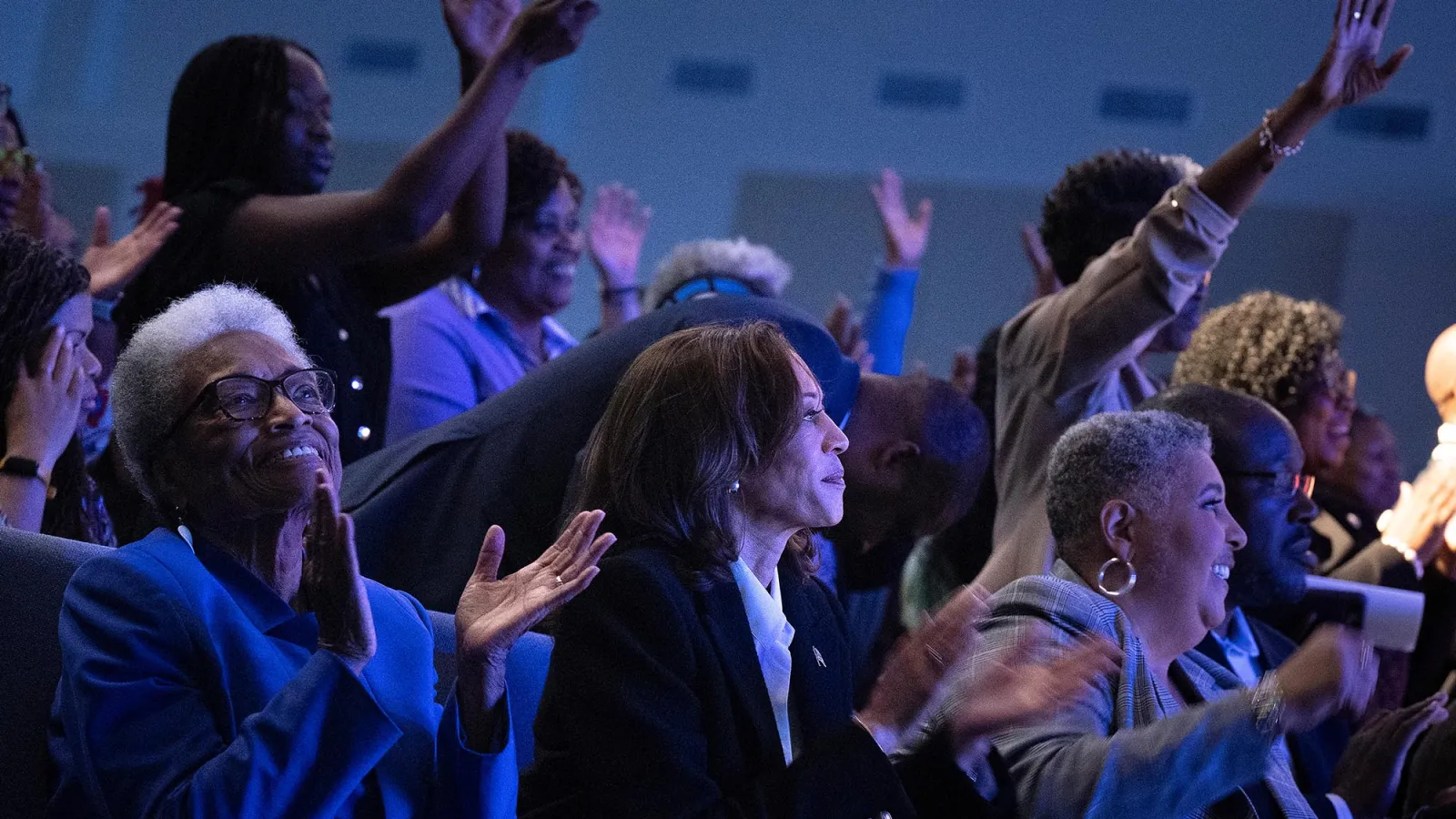
A recent example of this complex relationship occurred during a campaign visit by Vice President Kamala Harris to a church, where an elderly woman was escorted out for expressing her faith in an unsanctioned manner. Such incidents highlight the tensions that arise when churches are used as campaign venues, where political priorities can overshadow or disrupt worship. Congregants attend church to seek spiritual solace and guidance, not to participate in campaign rallies. Yet, political figures continue to appear in religious spaces, creating uncomfortable situations for members who wish to keep their worship separate from political discourse.
This dynamic is a point of contention among churchgoers. In surveys conducted by the Pew Research Center, many Americans express discomfort with the presence of politics in church settings, and some feel that political messages dilute the spiritual focus of services. While some churchgoers appreciate hearing religious leaders speak on social issues that touch on political matters, they expect these discussions to prioritize faith and community rather than political allegiance. As a result, when political figures visit churches, they risk alienating congregants who feel their sacred space is being co-opted for campaign purposes.
The Cost of Nonprofit Status: Free Speech and Self-Censorship in the Church
The limitations imposed by the 501(c)(3) status have far-reaching consequences for church leaders and congregants alike. Many pastors report feeling torn between the spiritual duty to address pressing social issues and the legal need to avoid political topics. For some, the constraints of nonprofit status are so restrictive that they choose to forgo it entirely. By operating without a 501(c)(3) classification, these churches sacrifice financial benefits to preserve their freedom of speech, allowing them to address any issue they see fit without concern for government oversight.
However, this choice comes with significant trade-offs. Churches that operate without tax-exempt status may struggle to attract donations, as contributors cannot deduct their gifts. For smaller congregations, this financial impact can be substantial, as tax-exempt status often makes a critical difference in funding outreach programs and maintaining facilities. As a result, many churches remain in a bind, retaining their 501(c)(3) status while navigating the delicate balance between addressing community needs and avoiding politically sensitive topics.
This tension raises questions about the true cost of tax-exempt status for churches. While the financial benefits are undeniable, the limitations on free speech compromise the ability of religious leaders to engage fully with their congregants. Some argue that the restrictions are necessary to maintain a separation between church and state, while others contend that they infringe upon the fundamental right of religious institutions to speak freely. In an era where social and political issues are deeply intertwined, the expectation that churches avoid certain topics feels increasingly out of touch with the realities of modern religious life.
The Impact on Worship and Community
The consequences of political involvement and self-censorship extend beyond the pulpit, influencing the dynamics of entire church communities. Congregants who attend services expecting spiritual guidance may find themselves disillusioned when church leaders avoid addressing certain issues or when political figures take the spotlight. In some cases, congregants may even leave their churches in search of spaces that prioritize faith over politics, contributing to a decline in attendance across denominations.
Research by the Pew Research Center reveals that Americans are increasingly uncomfortable with the intersection of politics and religion, with many expressing a desire for clear boundaries between the two. When politics intrudes upon worship, it can disrupt the sense of sanctuary that churches traditionally provide, shifting the focus from spiritual nourishment to partisan debates. This shift can be especially divisive, creating rifts within congregations as members disagree over the role of political discourse in church settings.
The Kamala Harris incident is one example among many where political visits to churches have caused division within communities. For those who attend church to focus on their faith, such disruptions are more than inconvenient—they represent a fundamental breach of the church’s purpose. By prioritizing political appearances over pure spiritual teachings, churches risk alienating members who feel their faith is being used as a means to an end, rather than as an end in itself.
Examining Solutions: A Call for Re-evaluation of Church-State Relations
Given these challenges, there is a growing call among religious leaders and scholars to reconsider the relationship between church and state. Some advocate for a re-evaluation of the 501(c)(3) status, suggesting that churches should have the freedom to address any topic relevant to their congregants, without fear of government reprisal. Others argue that churches should distance themselves from political figures, focusing solely on their spiritual mission and preserving the sanctity of worship spaces.
For churches that value their autonomy, the idea of operating independently of 501(c)(3) restrictions holds appeal. By forgoing tax-exempt status, churches can reclaim their freedom to address social issues without concern for government interference. While this choice may not be feasible for all congregations, particularly smaller ones that rely on donations, it represents a potential path for those committed to preserving the integrity of their message.
In considering these options, it’s clear that the church-state relationship needs to be re-examined. Whether through policy reform or a cultural shift away from political entanglements, the church’s role in society must prioritize its spiritual mission over political interests. For congregants, this shift would mean a return to the core purpose of worship spaces: to offer a place of peace, guidance, and community, unencumbered by the demands of partisan agendas.
Conclusion
The relationship between church and state has long been fraught with complexities, and the modern entanglement of church and politics only underscores the need for a re-evaluation. Churches that depend on the state for financial benefits inevitably face pressures that compromise their freedom to speak openly on pressing social issues. Meanwhile, political figures who seek church platforms risk alienating congregants, disrupting worship, and undermining the very purpose of religious spaces.
Ultimately, it is up to church leaders, policymakers, and congregants to find a balance that preserves the integrity of the church while respecting the need for a separation between religion and politics. By fostering a renewed commitment to the church’s spiritual mission, faith communities can better serve their members, focusing on the values and teachings that have long defined their purpose.
