
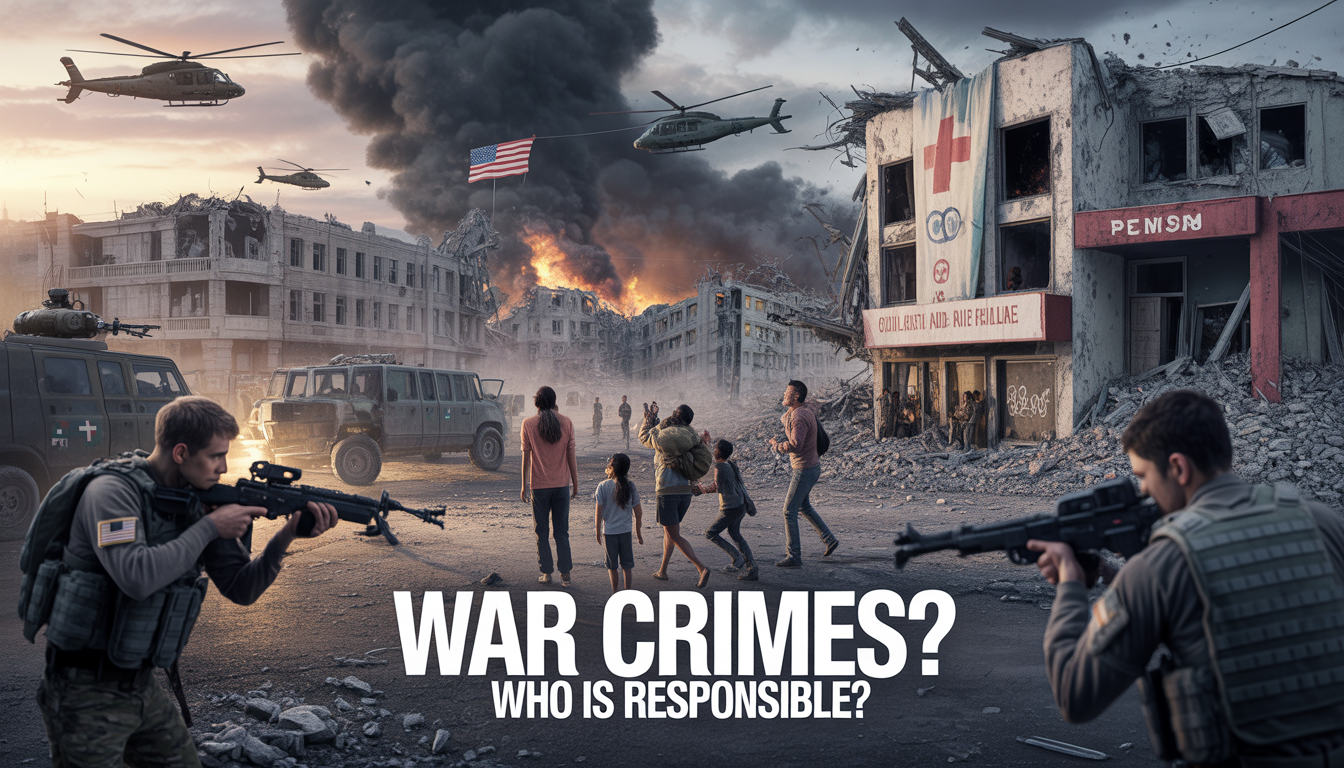
Power without law is not strength. It is terrorism with a flag.
There is a growing, dangerous idea that if a government claims “national security” or “necessity,” it can do whatever it wants on the battlefield. But international humanitarian law does not bow to slogans. Under the Geneva Conventions and the Rome Statute, deliberate attacks on civilians, strikes against schools and hospitals, unlawful detention, forced transfers, and the use of force without proportionality are not mistakes — they are serious war crimes.
If the reports about Iran are true, then we may be looking at a breakdown that strikes to the core of the law of war. A school struck. Families killed. Civilian infrastructure like water plants targeted. These are not collateral damage; they are evidence of a system where the threshold for “acceptable harm” has been erased.
Similarly, in Venezuela, if the U.S. operation under Donald Trump involved unlawful killings, arbitrary detention, or the forced removal of people without lawful process, then the issue is not whether the operation was bold. It is whether it was criminal. A political goal is not a military objective. A “regime change” impulse is not a legal justification.
Public statements matter. When leaders speak as if restraint is weakness, when they encourage troops to act aggressively without regard for the law, and when they publicly praise violence that may have crossed the line into war crimes, they are not just influencing politics. They are shaping a legal record. The law of command responsibility says leaders can be held accountable for what they order, allow, or fail to stop.
And then there are the resignations. Senior officers are not quitting press conferences; they are quitting because they can no longer serve in good conscience. If respected commanders walk away, citing illegality, ethical collapse, or political pressure overriding the law, that is not a trivial bureaucratic detail. It is a warning from inside the system that the line has been crossed.
War is brutal. That is not an excuse. It is a reason the law must be stronger. When civilians are treated as expendable, when civilians drink poisoned water because their plant was bombed, when teenagers are drafted into wars not their own, and when leaders look away or cheer, then the law must respond — not just with words, but with accountability.
If the facts being reported are accurate, then what is happening is not just foreign policy. It may be history being written in the language of war crimes. And at that point, the question is not whether we are “patriotic enough.” The question is: will we hold power to the law — or will we let power become the law?
