
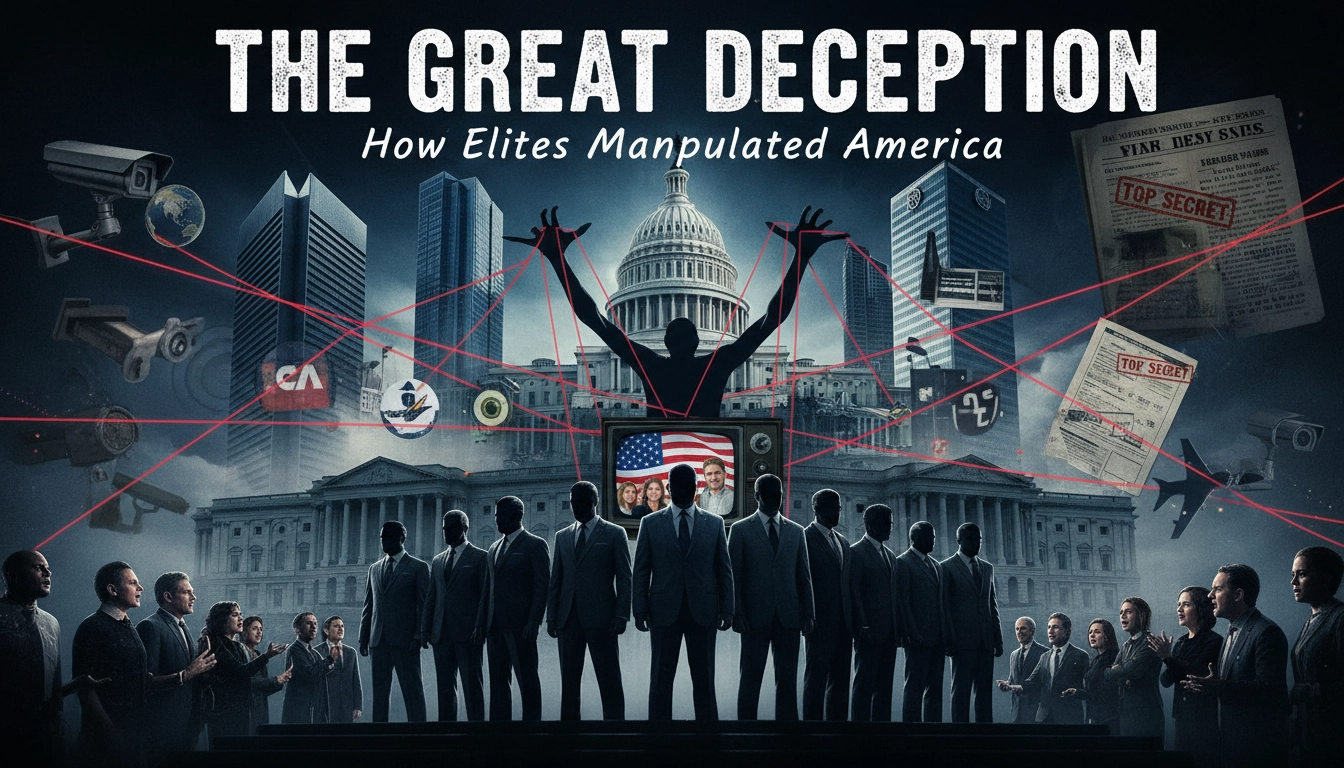
For much of American history, the people at the top of government, intelligence, and corporate power have not been ordinary citizens. They have been a small ruling class that used state power to shape public opinion, justify foreign intervention, and defend policies that often served strategic and economic interests more than truth or democracy.
That is why so many Americans were told one story while the government was doing another. Declassified records, congressional investigations, and intelligence archives show that U.S. agencies repeatedly concealed, distorted, or justified actions that later proved harmful, illegal, or deeply misleading.
The Pattern of Deception
The Church Committee was created after a wave of revelations exposed illegal and abusive intelligence activity by the FBI, CIA, NSA, and other agencies. Its work showed that official secrecy had hidden surveillance, infiltration, political targeting, and abuse of power from the public for years. The FBI’s COINTELPRO program is one of the clearest examples: it used surveillance, anonymous letters, infiltration, and harassment to disrupt political organizations and neutralize dissent.
The same pattern appears in foreign policy. Declassified documents and archival releases confirm CIA involvement in destabilizing governments, including Iran and Guatemala, through covert action and propaganda. These operations were often sold to the public as necessary for security, but the historical record shows they frequently protected U.S. strategic interests, not freedom.
How They Sold the Lie
Government officials rarely admit deception directly. Instead, they use language like national security, anti-communism, counterterrorism, or stability to make hidden actions sound necessary and noble. In the Iraq War era, declassified material shows how failed intelligence and propaganda-driven decision-making were used to justify war to the American people. When those claims collapsed, the damage had already been done.
This is how manipulation works: officials present fear as certainty, repeat simplified slogans, and rely on media channels to reinforce the same message until large parts of the public accept it as fact. The result is not just foreign destruction, but domestic division, because people are pushed to fight each other instead of questioning the institutions that misled them.
Why People Believe It
Americans are not gullible because they are unintelligent. They are vulnerable because fear, patriotism, and constant repetition can overpower skepticism, especially when the same message comes from trusted leaders, major news outlets, and intelligence-backed narratives. The public is often asked to choose sides before the facts are clear, and by the time the truth emerges, the political damage is already locked in.
That is why lies are so effective. They do not need to convince everyone forever; they only need to dominate the moment. Once a lie becomes part of the public atmosphere, it can justify wars, surveillance, censorship, and crackdowns on dissent while dividing ordinary people into camps that defend the very system harming them.
The Deeper Cost
The long-term cost of this system is both moral and practical. Abroad, covert operations and intervention helped create resentment, instability, and enemies. At home, surveillance and propaganda taught Americans to distrust one another instead of demanding accountability from power.
The real lesson is not just that officials lied. It is that lies became a governing method. Once power learns it can manipulate public fear, it keeps doing it until enough people stop believing the story and start following the evidence
Closing Thought
The United States did not become divided by accident. Division was often useful to those in power because a distracted public is easier to control than an informed one. The more Americans understand the history of covert action, propaganda, and institutional deceit, the harder it becomes for elites to repeat the same playbook.
